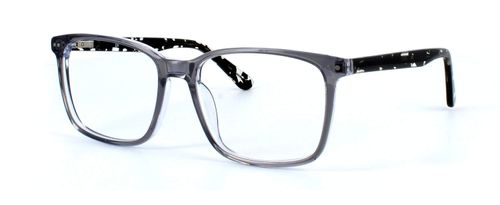
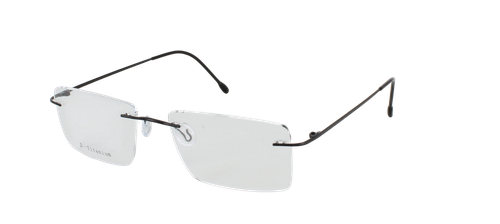
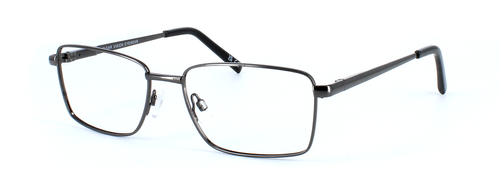
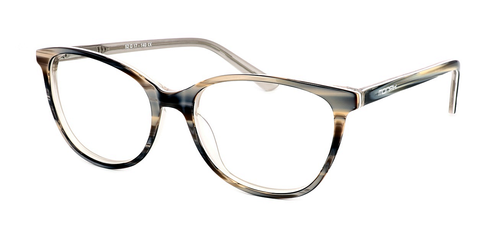
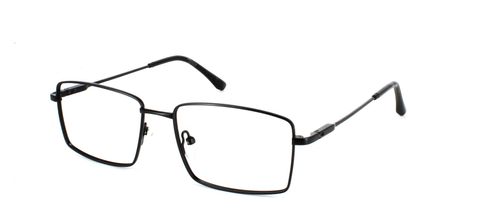
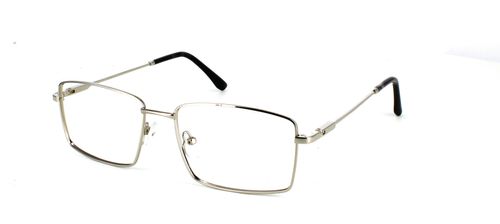
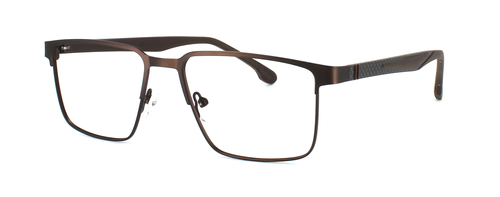
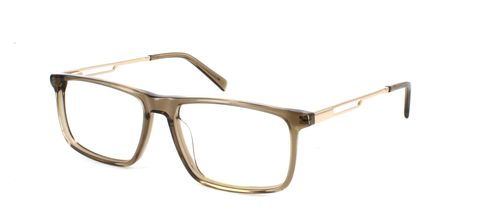
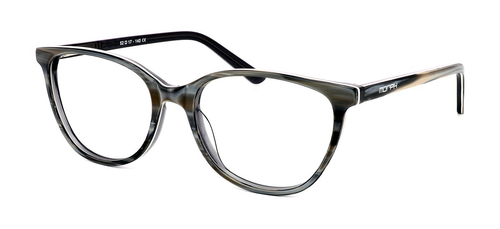
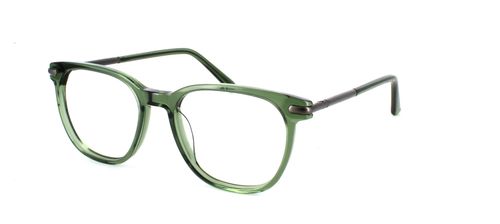
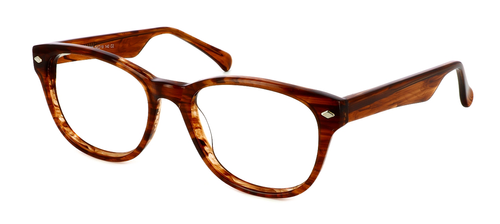
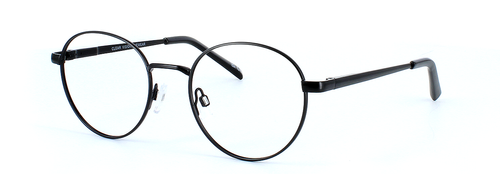
By Frame Style:
By Frame Material:
By Frame Shape:
By Frame Style:
By Frame Material:
Designer Glasses Frames:
By Gender:
Designer Sunglass Frames:
Bifocal glasses combine two prescriptions into a single lens, giving you clear vision at two distances without swapping pairs. Every frame in our collection can be fitted with D28 Flat Top bifocal lenses for £32, custom-glazed to your prescription. We've supplied prescription glasses online since 2005, dispatched with free UK delivery.
Step 1: Choose Your Frame
Browse our full range and use the virtual mirror to see how they look on you.
Step 2: Enter Your Prescription
Add your prescription at checkout, and pick the bifocal configuration that suits how you use your glasses. If you don't have your prescription to hand, send it to us afterwards by email or WhatsApp.
Step 3: We Handle the Rest
We position the bifocal segment, glaze your lenses, run quality checks, and dispatch with free UK delivery.
Bifocal glasses use a single lens with two distinct prescription zones, separated by a visible line. The main area of the lens carries one prescription, and a smaller D-shaped segment near the bottom carries the second. Your eyes drop into the lower segment for the closer task and return to the main area for the further one.
We use D28 Flat Top bifocal lenses across our entire range. The "D28" refers to the 28mm-wide D-shaped reading segment, which has a flat top edge and a curved bottom. The shape is the most common bifocal design in the UK because it gives a generous reading area without eating into your distance vision, and the flat top edge makes the transition between zones predictable and easy to learn.
Bifocals are the simplest form of multifocal lens, which is part of why people tend to adapt to them quickly and why they cost considerably less than varifocals.
The two zones in a bifocal lens are physically distinct, with a clear dividing line where the prescription changes. There is no gradual transition between them, so the optics in each zone are stable across the full width of that zone. This is the main optical difference between bifocals and varifocals, and it is what gives bifocals their wide, distortion-free viewing areas.
When you look straight ahead, you are using the main upper portion of the lens. When you look slightly downward, your line of sight drops into the D-shaped segment and uses the second prescription. With a small amount of practice, your eyes do this automatically.
The position of the segment line is set when we glaze your lenses, based on the frame you choose and standard fitting guidelines.
Bifocal lenses come in several segment shapes. The D28 Flat Top, which we use across our entire range, is the most common bifocal design in the UK and the standard recommendation from most opticians. The 28mm-wide D-shaped reading area provides a generous close-up zone while preserving peripheral vision below the eye line, which makes walking and stair use safer than wider segment shapes.
Other bifocal designs exist. Executive bifocals run the reading segment across the full width of the lens, giving the largest possible reading area at the cost of any peripheral distance vision below the line. Round-segment bifocals, an older design with a circular reading area, are now rarely fitted. C-segment bifocals use a curved half-moon shape that some wearers prefer for its slightly less visible line.
We focus on D28 Flat Top because it offers the best all-round balance for most wearers. If you have a clinical or occupational need for a different segment shape, contact our team before ordering.
We offer three bifocal configurations at the same price. Choose the combination that matches how you actually use your glasses. Each option uses our D28 Flat Top lens design.
D28 Flat Top - Distance/Reading | The most common and most popular bifocal. Distance prescription in the main lens area, reading prescription in the lower segment. Suits most wearers, particularly anyone whose two main needs are seeing far away and reading. |
D28 Flat Top - Distance/Intermediate | Distance prescription in the main lens area, intermediate prescription in the lower segment. Useful if you spend time driving and also need clear vision at arm's length, for example for car dashboards, supermarket shelves, or a desktop monitor. |
D28 Flat Top - Intermediate/Reading | Intermediate prescription in the main lens area, reading prescription in the lower segment. A strong choice for office work, where you switch between a computer screen and reading documents or your phone, and don't need a distance prescription while sitting at the desk. |
If you're unsure which configuration suits your prescription and lifestyle, contact our team before ordering.
All three options can be combined with any of our lens coatings and tints at checkout.
One pair for two distances | Bifocals replace two separate pairs of glasses with a single pair, so you don't need to keep switching during the day. |
Wide, stable viewing zones | Because each zone is a fixed prescription, the optics are clear right out to the edges. There's no peripheral distortion or narrow corridor to look through, unlike varifocal lenses. |
Fast adaptation | Most people adjust to bifocals in a few days. The clear dividing line makes it obvious which zone you're using, which speeds up the learning curve. |
All bifocal glasses can be customised with a range of lens coatings at checkout. Options include anti-reflective and scratch-resistant coatings as well as blue-light-blocking lenses, each designed to improve comfort and extend the life of your lenses.
If you spend time outdoors, you can also add tinted or light-reactive lenses to your bifocals. Photochromic lenses darken automatically in sunlight, while polarised lenses reduce glare for driving and outdoor activities. Both options include UV protection as standard.
If you already have frames you like, our reglaze service lets you fit new bifocal lenses into them without buying a new pair. This works whether you're updating your prescription, switching from single-vision lenses, or moving from varifocals to a clearer two-zone setup.
Most people adapt to bifocals within a few days, and adaptation is generally faster than with varifocals because the two zones are clearly separated. Wear them consistently rather than switching back to your old pair, and move your head rather than your eyes when shifting between zones.
The main thing to watch for is stairs. Looking down at your feet drops your gaze into the reading segment, which can make them appear closer than they are, so tilt your head down slightly to look through the upper portion of the lens instead. If you're still uncomfortable after two weeks, get in touch, and we'll check the fit.
If you genuinely can't get on with your bifocals, we'll swap the lenses for single-vision distance or reading at no extra charge within 30 days of receipt.
We are a leading online glasses retailer for bifocal glasses. We are committed to providing you with the same fantastic service and products you would find on the high street, only for much, much less. Here's what Glasses2You can do for you:
Find your next pair of bifocal glasses at Glasses2You.
Bifocal glasses are lenses that correct two distances in a single pair, with a visible line separating the two zones. The main upper area of the lens carries one prescription and a D-shaped segment in the lower portion carries the second. They're commonly used to combine distance and reading vision, but they can also be configured for distance and intermediate, or intermediate and reading.
Bifocals have two distinct prescription zones separated by a visible line. Varifocals replace that line with a smooth, gradual transition and add an intermediate zone, so they cover three distances rather than two. Bifocals are simpler, cheaper, and faster to adapt to, and they offer wider distortion-free viewing in each zone. Varifocals look like standard glasses from the outside and handle screen work without needing a specific configuration. For a full comparison, see our guide to varifocals vs bifocals.
Bifocals are best for people who need help at two distinct distances, most often due to presbyopia, the natural decline in near-focus ability that typically begins in your mid-40s. They're a particularly good fit if you've been managing with two pairs of glasses and want to consolidate, or if you've tried varifocals and didn't get on with the corridor.
Single-vision lenses correct one distance only, either close range or long distance. Bifocals correct two distances within the same lens, which removes the need to carry a second pair.
Yes. Every frame in our collection can be fitted with bifocal lenses. Choose your frame, select the bifocal lens option at checkout, and we'll glaze the lenses to your prescription. Larger frames give a slightly more comfortable position for the segment line, but any frame will work.
Yes. Bifocal glasses can be customised with anti-reflective, scratch-resistant, UV protection, and blue-light-blocking lenses. Tints, photochromic lenses, and polarised lenses are also available. All extras are added during the checkout process.
Pick a frame, choose the bifocal lens option, select the configuration you need (Distance/Reading, Distance/Intermediate, or Intermediate/Reading), and enter your prescription at checkout. If you don't have your prescription to hand, you can place the order and send it to us afterwards by email or WhatsApp.
Most people adapt within a few days, and almost everyone is comfortable within two weeks. The clear dividing line between the two zones makes the learning curve straightforward, particularly compared to varifocals.
Yes. With the standard Distance/Reading configuration, the upper portion of the lens carries your distance prescription, which covers the road ahead. Some drivers also use the Distance/Intermediate variant if they want clearer vision of the dashboard and mirrors as well as the road.
Yes, with the right configuration. Choose the Intermediate/Reading variant if you mostly switch between a computer screen and reading on paper or your phone. Choose Distance/Intermediate if you also need clear vision further away. The standard Distance/Reading setup is less suited to long screen sessions because there is no dedicated intermediate zone.
For long screen days, an anti-reflective coating and an optional blue-light filter can improve comfort.
Affordable bifocals can still be high quality when the lenses are accurately made and correctly glazed. Price differences usually reflect the frame, the lens material, and any extras like thinner lenses or premium coatings, rather than whether the bifocal lenses themselves are good quality. If you're unsure which option suits your prescription, our team can help you choose.
No. Progressive and varifocal lenses are the same thing as each other, and both refer to lenses with a smooth transition between multiple prescriptions and no visible line. Bifocals have two clearly separated zones with a visible line between them. The two designs are different solutions to the same underlying problem.
Absolutely. You can use our reglazing service to have your existing frames fitted with bifocal lenses, making it easy to update your prescription without changing your favourite pair.


Buy prescription glasses online with confidence at Glasses2You. Enjoy a 100% satisfaction guarantee, 30 day returns and free UK delivery, plus affordable international delivery with tracked and signed shipping.
We use the same glazing processes, technology and suppliers as high street opticians, so you get quality prescription spectacles and reading glasses at a fraction of the price. Pick up spare pairs for work, home and the car, or choose different styles to suit every occasion without the high street cost.